How to Start Forex Trading in 2026 as a Complete Beginner
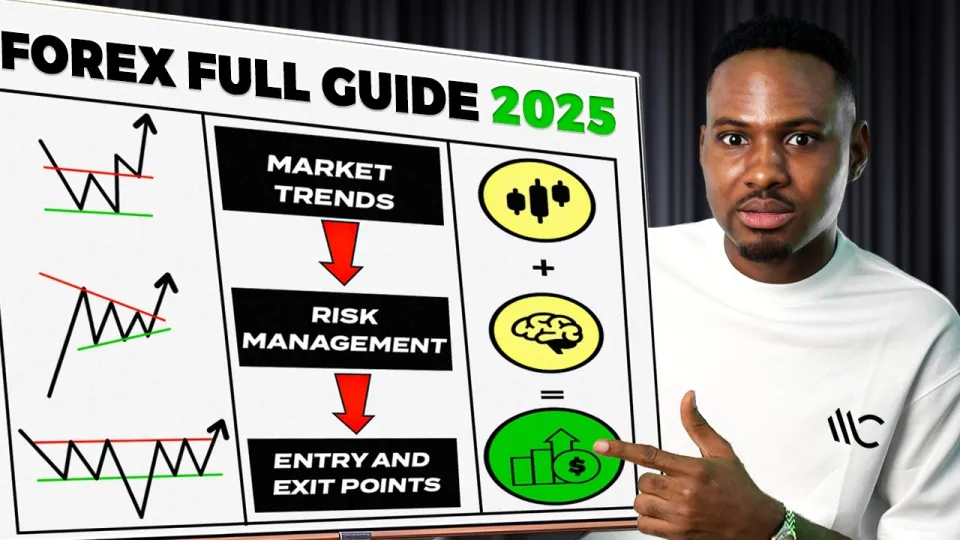
Video: How To Start Forex Trading For Beginners’ 2025 (Full Course)
You can order the same kind of articles for your own video to boost it on YouTube and Google. Just message the Telegram bot @sat_sit_bot. The bot writes and publishes the articles itself (with your YouTube video embedded) on popular topical websites (no ads). Your first 50 articles are free.
· based on the channel Jeffrey Benson Forex
Key takeaways
- Forex is the global market for exchanging national currencies, with daily volume exceeding $7 trillion.
- Beginners need a regulated broker, a trading platform like MT5, a demo account, and a trading journal.
- Risk management — risking no more than 1–2% per trade — is the core survival skill.
- Jeffrey Benson Forex offers a free full course and a daily free signal via Telegram.
- Most beginner losses come from overleveraging, revenge trading, and skipping a trading plan.
Forex trading for beginners starts with understanding what currency pairs are, how the market operates, and which tools you need before risking real money. You open a demo account with a regulated broker, learn one simple strategy, and practice risk management until you can execute trades consistently without emotion. Jeffrey Benson Forex covers this full path in a free video course, and you can access his student plans via Fire Pips FX plans.
What forex trading is and how the currency market works
Forex is the decentralized global market where national currencies are exchanged, and it operates 24 hours a day from Monday to Friday across four major sessions: Sydney, Tokyo, London, and New York. Prices move because currencies are quoted in pairs — for example, EUR/USD tells you how many US dollars one euro buys. When you buy EUR/USD, you expect the euro to strengthen against the dollar; when you sell, you expect the opposite. The market is driven by interest rates, inflation data, geopolitical events, and central bank decisions. Unlike stocks, there is no central exchange: trading happens over-the-counter through a network of banks, brokers, and electronic platforms. The daily turnover exceeds $7 trillion, which makes forex the most liquid financial market in the world. For a beginner, this liquidity means you can enter and exit trades quickly, but it also means prices can move fast against you if you are not prepared.
The essential tools and apps every beginner must use
A beginner needs four core tools: a regulated broker, a trading platform, a demo account, and a trading journal. The broker holds your funds and executes orders — choose one regulated by a tier-1 authority such as the FCA, ASIC, or CySEC. The trading platform is where you analyze charts and place trades; MetaTrader 5 (MT5) is the industry standard and is used in the Jeffrey Benson Forex course. A demo account lets you practice with virtual money until you prove you can follow a plan. A journal — a simple notebook or spreadsheet — records every trade, including why you entered, how you felt, and the result. Many viewers of the course note that writing things down while watching tutorials helps the material stick, and the same principle applies to your trade log. You will also want a charting tool with at least two moving averages and a way to mark support and resistance levels.
A simple strategy foundation you can practice on a demo account
A workable beginner strategy is built on three questions: what is the trend, where is the key level, and what is my trigger to enter? Start with a higher timeframe such as the 4-hour chart to identify the trend using a 50-period moving average. Then mark the most recent swing high and swing low — these are your support and resistance zones. Your entry trigger can be a bullish or bearish candlestick pattern (like an engulfing candle) that forms at one of those zones in the direction of the trend. Place your stop-loss just beyond the zone that invalidates the setup, and set your take-profit at least twice the distance of your stop-loss. This gives you a 1:2 risk-reward ratio, meaning you only need to win about 34% of your trades to break even before costs. Practice this exact sequence on a demo account for at least 50 trades before going live. The goal is not to predict the market but to execute the same process every time.
How to place your first trade and manage risk
Placing your first trade means calculating your position size before you click buy or sell. Decide on a fixed risk per trade — 1% of your account is standard for beginners. If you have a $1,000 account and risk 1%, your maximum loss is $10. With a 20-pip stop-loss on EUR/USD, a standard lot (1.0) would risk about $200, so you must reduce your position size to 0.05 lots to keep the risk at $10. Always set a stop-loss and take-profit order at the same time as your entry; never trade without a stop. After the trade is open, do not move your stop-loss further away to avoid being stopped out — that is how small losses become account-destroying ones. Keep a maximum of one or two open trades at a time when you are starting, and avoid trading during major news releases like the US Non-Farm Payrolls or FOMC rate decisions until you understand how volatility spikes affect your orders.
Common beginner mistakes and how to avoid them
The most common beginner mistake is overleveraging — using too much borrowed capital because the broker offers leverage of 1:100 or more. Leverage amplifies both profits and losses; a 1% move against a 1:100 position wipes out your entire margin. Another mistake is revenge trading: after a loss, you immediately open another trade to win the money back, usually with a larger size. A third is skipping a trading plan — without written rules, you will make emotional decisions. Beginners also underestimate the cost of spreads and overnight swaps, which eat into profits on small accounts. Finally, many jump to live trading after a few lucky demo trades. Avoid all of these by sticking to a demo account until you have a proven track record, risking no more than 1–2% per trade, and reviewing your journal weekly.
Answers to the questions beginners ask most
Viewers of the Jeffrey Benson Forex course often ask whether they can copy trades instead of learning to trade themselves. Copy trading is available — the channel offers a free daily signal via Telegram and a premium group — but it does not replace understanding risk management. Others ask how long it takes to become profitable: there is no fixed timeline, but most educators suggest six to twelve months of consistent demo practice before going live. A frequent doubt is whether a small account can grow — it can, but position sizing and realistic expectations matter more than the starting balance. Finally, many wonder if forex is a scam: the market itself is legitimate, but the risk comes from unregulated brokers and from trading without a plan. Treat education and risk control as your first investment.
Useful links from the course
- Fire Pips FX student plans — the author's structured training programs.
- Free daily signal on Telegram — one free trade idea per day.
- Assex Markets broker registration — the broker recommended in the video.
- Jeffrey Benson help bot — to join the premium signal group.
Final thoughts on starting forex the right way
Starting forex trading as a beginner is a process of building habits, not chasing quick profits. The Jeffrey Benson Forex full course walks through the market structure, tools, strategy, and risk management in a single free video, which makes it a practical starting point for anyone serious about learning. Use a demo account, keep a journal, and risk only what you can afford to lose. When you are ready for structured guidance, you can review the student plans at Fire Pips FX. The channel Jeffrey Benson Forex is the author of this breakdown and a useful reference for beginner-friendly explanations.
Questions & answers
Can I copy trades instead of learning forex myself?
Yes, copy trading and signal groups exist, and the course offers a free daily signal via Telegram. However, copying without understanding risk management leaves you unable to evaluate the trades or protect your account when signals go wrong. Most educators recommend learning the basics first, even if you later use signals as a supplement.
How much money do I need to start forex trading?
You can open a live account with as little as $10–$100 at many brokers, but small accounts limit your ability to size positions safely. A more practical minimum for learning with 1% risk per trade is $500–$1,000. The priority is not the starting balance but consistent risk control.
How long does it take to become profitable in forex?
There is no fixed timeline, but most beginner courses suggest six to twelve months of demo trading and journaling before going live. Profitability depends on mastering one strategy and applying risk management consistently, not on the number of indicators you use.
Is forex trading a scam?
The forex market itself is legitimate and regulated in major jurisdictions, but scams exist through unregulated brokers and fake signal sellers. Choose a broker regulated by authorities like the FCA or ASIC, avoid promises of guaranteed returns, and treat risk management as your first priority.
Source: How To Start Forex Trading For Beginners’ 2025 (Full Course) · Markdown version